For most of the last decade, artificial intelligence has lived behind glass: inside phones, browsers and cloud data centers. That boundary is beginning to disappear.
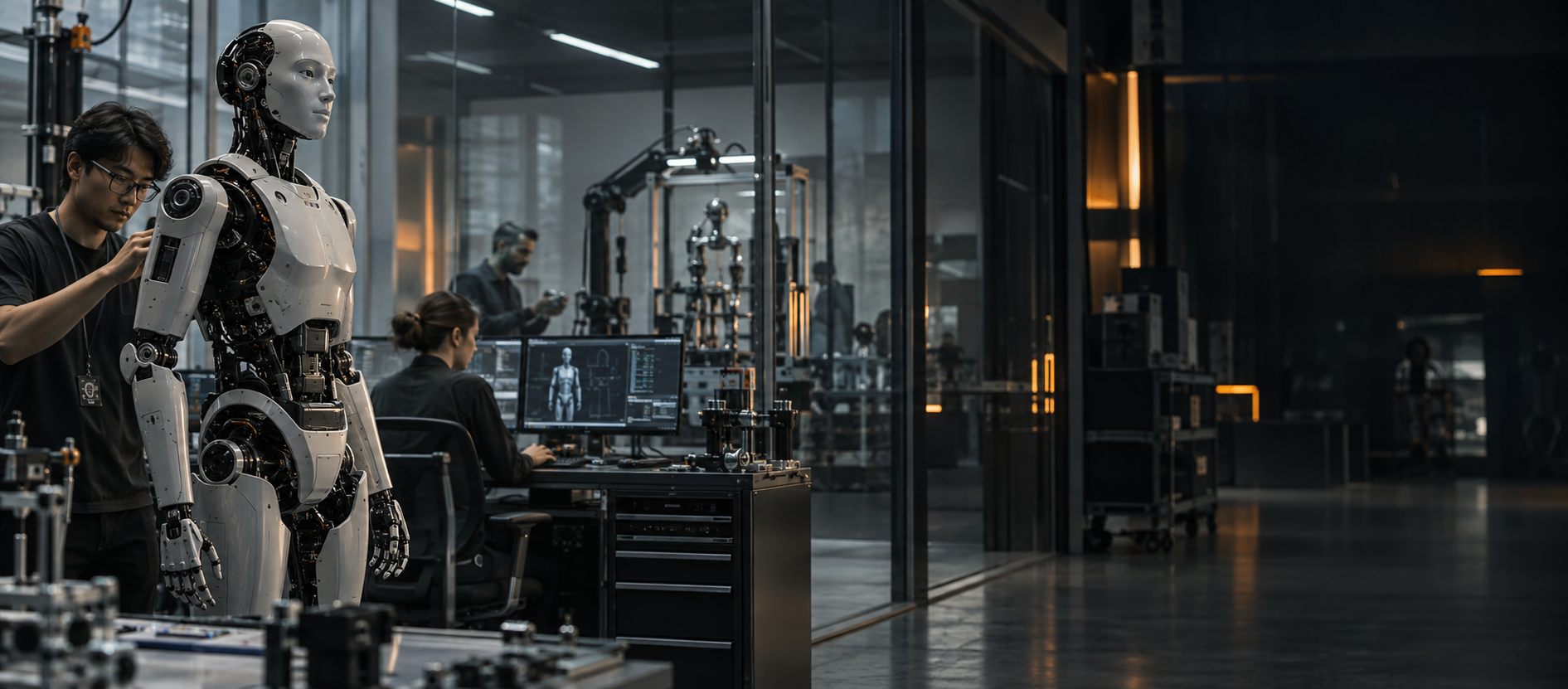
In a new generation of laboratories and factories, models are gaining bodies. They can perceive space, reason about motion and turn software decisions into physical action. The shift is still early, uneven and expensive—but it is now visible enough to change how founders, investors and industrial leaders plan.
The inflection point is not a single robot.
The breakthrough is a convergence. Better foundation models make machines more adaptable. Cheaper sensors make the physical world legible. Simulation lets teams train against millions of scenarios before hardware touches a factory floor. And a maturing supply chain is shortening the distance between prototype and production.
“The important change is not that robots can do one task perfectly. It is that they are beginning to learn the next task without being rebuilt.”
— Pinerook Intelligence, field notes
This matters because the economics of automation have always been constrained by rigidity. Traditional systems earn their keep in stable environments. Physical AI is aimed at the messier parts of work: changing inventory, irregular objects, uncertain routes and tasks designed for human hands.
The companies that win may look less like app businesses and more like vertically integrated operating systems for the physical world.
A new technology stack is taking shape.
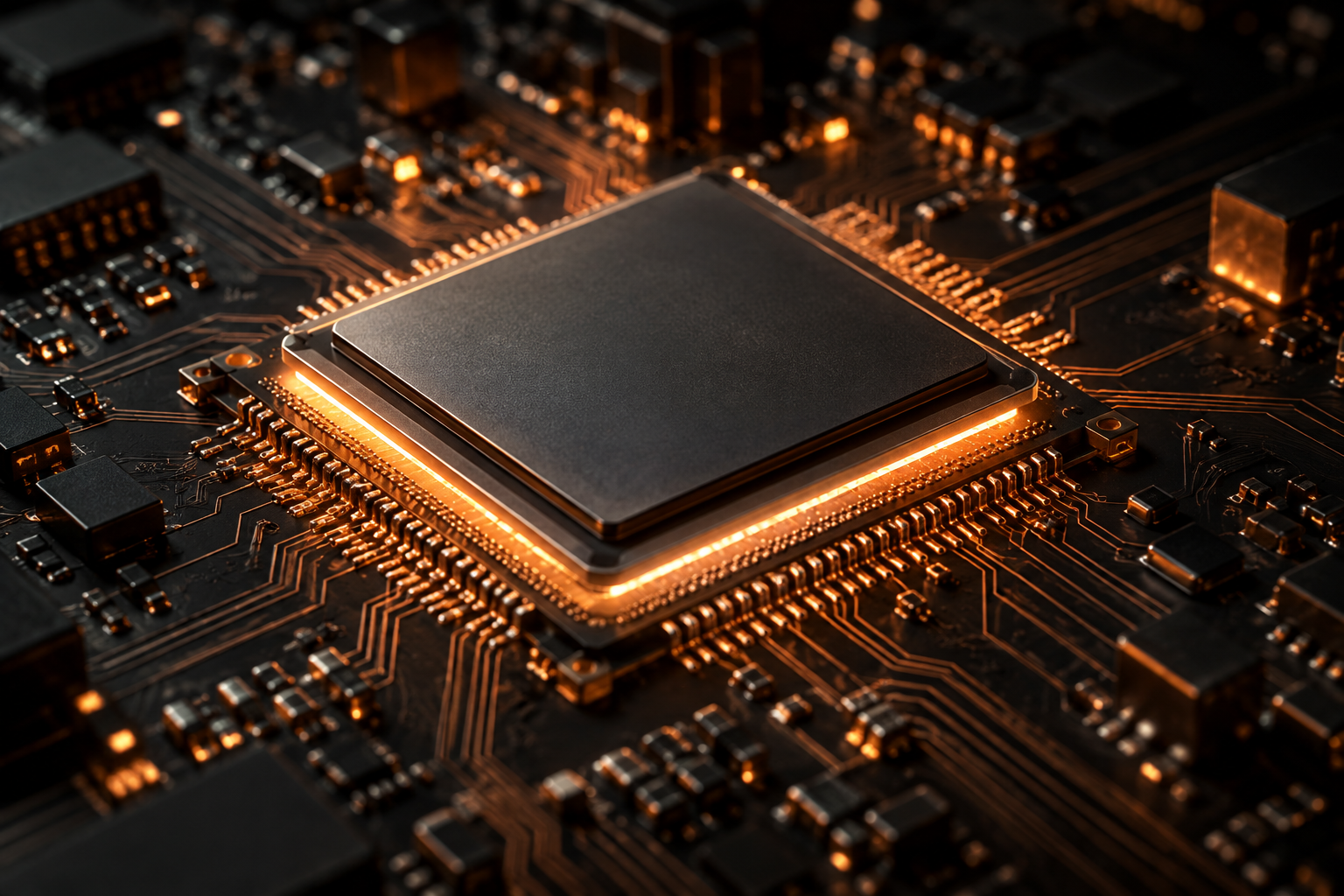
Four layers are beginning to solidify: foundation models for vision and action, simulation environments, specialized compute at the edge, and hardware platforms capable of reliable repetition. No layer is sufficient by itself. The product is the coordination between them.
That creates a difficult founder choice. Building across the stack offers control, but consumes capital. Specializing can speed distribution, but exposes the company to platform risk. The strongest teams are drawing the boundary around the part of the system where their data advantage compounds.
The economics are finally leaving the lab.
Hardware businesses are unforgiving. Reliability takes longer than a demo suggests, working capital arrives before revenue and deployment creates operational complexity. Yet the opportunity is widening because the customer conversation has changed. Industrial buyers increasingly ask for outcomes rather than machines.
That shift favors companies able to bundle hardware, intelligence, maintenance and workflow integration into a measurable operating result. The recurring revenue is not merely software access; it is reliable capability.
- Watch deployment density.
One successful robot matters less than one workflow repeated across many sites.
- Follow proprietary data loops.
Real-world operating data will separate durable systems from impressive demos.
- Measure human leverage.
The best deployments expand what skilled workers can supervise and accomplish.
What comes next.
The near future will look less cinematic than the demos—and more consequential. The first durable category leaders will likely emerge in narrow environments where labor is scarce, downtime is measurable and the return on autonomy is obvious.
Over time, those beachheads will connect. Machines will share models, facilities will become more legible and software will begin to coordinate fleets across the physical economy. The screen era is not ending. It is gaining hands.
 Seen first.