
Investor board rights determine how startup investors participate in board governance, influence major decisions, and oversee the companies they finance. When a startup raises venture capital, investors may request the ability to designate a director, attend board meetings as observers, or participate in approvals affecting the company's direction. These arrangements can provide useful expertise and accountability, but they can also change how much control founders retain over strategic decisions.
Within Term Sheets and Investment Deals, board rights are particularly important because they affect the startup's governance long after the investment closes. A founder may continue owning a substantial percentage of the company while losing the ability to determine board decisions independently. The outcome depends on board composition, appointment rights, voting requirements, and the interaction between board authority and separate shareholder protections.
This guide explains the principal board rights investors may negotiate, how director appointments and board voting work, and how founders can evaluate governance arrangements before signing. A practical example illustrates how different board structures affect decision-making, while a negotiation framework identifies the contractual details that deserve the closest attention.
What Are Investor Board Rights?
Investor board rights are contractual or corporate governance rights that allow specified investors to participate in the composition, proceedings, or decisions of a startup's board of directors. These rights may include designating directors, appointing non-voting observers, receiving board materials, or requiring particular approvals for specified actions.
They are common in venture-backed companies, where institutional investors often seek meaningful oversight of the business after providing capital. However, investing in a company does not automatically entitle a shareholder to a board seat. Representation depends on the company's governing documents, financing agreements, applicable law, and negotiated terms.
In a typical US venture financing, board composition may be addressed through a voting agreement coordinated with the company's certificate of incorporation. Observer arrangements and other governance protections may appear in separate agreements or side letters.
The distinction between an investor's contractual appointment right and the authority of an appointed director is important. A person designated by an investor becomes a director with legal responsibilities associated with that office. The director is not merely an agent authorized to vote according to the investor's instructions.
Why Investors Negotiate Board Representation
Venture investors often provide capital before a startup has established consistent profitability or predictable operating results. Board participation gives them a way to monitor progress, contribute strategic expertise, and understand material decisions that may affect their investment.
An experienced investor director can help management evaluate fundraising options, recruit senior executives, identify commercial partnerships, and navigate significant organizational changes. Board representation can also strengthen accountability by creating a structured process for reviewing performance and strategic plans.
From the founder's perspective, however, the value of investor participation depends on the quality of the director and the balance of authority. An investor representative who understands the company's industry may contribute meaningfully, while one who attempts to direct routine operations can create delays and management friction.
The objective is not necessarily to prevent investors from participating in governance. It is to establish a board structure that supports informed oversight while maintaining clear responsibility for running the business.
The Main Types of Investor Board Rights
Investor influence can arise through several arrangements with different legal and practical effects. Founders should distinguish rights that provide formal voting authority from those that offer access, participation, or approval over particular matters.
Director Designation Rights
A director designation right allows a specified shareholder or shareholder group to nominate or designate a person for election to the company's board, subject to applicable procedures.
For example, a Series A investor may negotiate the right to designate one director while it continues to hold a minimum amount of qualifying preferred stock. The relevant shareholders may agree to vote their shares to elect that designated person.
Founders should review who controls the designation, whether the right belongs to one fund or a defined shareholder group, and the circumstances under which it expires. The agreement should also explain how vacancies and replacements are handled.
Board Observer Rights
A board observer may attend specified meetings, receive agreed materials, and participate in discussions without having a director's formal voting rights. Observer arrangements can provide investors with valuable visibility while limiting the number of voting seats.
Unlike a director, an observer does not generally acquire fiduciary duties merely by receiving observer status. However, the contractual arrangement must address confidentiality, access limitations, and potential conflicts. An observer's position should not be mistaken for an unrestricted entitlement to every document or discussion.
Investor Approval and Consent Rights
Certain financing arrangements require investor approval before the company takes specified actions. These may concern issuing particular securities, amending governing documents, or completing major corporate transactions.
These consent rights should be distinguished from board voting. A preferred shareholder approval requirement may operate separately from a director's vote, meaning a decision could require satisfaction of both processes.
The details belong to the relevant corporate documents and agreements. Founders should identify each approval mechanism without assuming that every investor protection is exercised through the board.
Comparing Investor Governance Rights
Table 1. Investor Board Rights and Their Practical Effect on Startup Governance
The following table compares the principal governance arrangements investors may negotiate and explains how each affects company decision-making. Because these mechanisms operate differently, understanding their limitations is essential when evaluating a proposed financing agreement.
These arrangements can operate simultaneously. A startup might have a founder-controlled board while preferred shareholders retain separate consent rights over issuing new securities. Conversely, an investor may hold a board seat without controlling the board's overall vote. Founders should therefore assess governance as a combination of rights rather than looking only at the number of investor-appointed directors.
How Startup Board Composition Works
Board composition determines which individuals participate in formal board decisions. Early-stage startups often begin with a small founder-led board, but financing rounds can introduce investor directors and independent members.
A three-member board might consist of two founder-designated directors and one investor-designated director. Assuming all directors have one vote and ordinary matters require a simple majority, the founder-designated directors could approve a resolution without the investor director's support.
A different structure could include one founder director, one investor director, and one independent director. Under that arrangement, neither the founder nor the investor director could determine an ordinary majority decision alone.
The independent seat can therefore become especially influential. Its value depends on the individual's qualifications, independence, appointment process, and ability to evaluate difficult decisions without treating either party's preferences as automatically decisive.
Appointment, Removal, and Replacement
A board designation provision should address more than the initial appointment. Founders need to understand who can remove a designated director, who selects a replacement, and whether the designation right continues after the relevant investor reduces its ownership.
Some agreements condition investor designation rights on maintaining a specified number of shares. Others establish conditions connected to employment status for founder-designated directors.
These details can change the company's governance over time. A board that appears balanced at the closing of a financing may operate differently after a director resigns, an investor transfers securities, or a founder leaves the business.
A Practical Board Voting Example
Consider Northbridge Technologies, a fictional venture-backed software company preparing for its Series A financing. Before the investment, the company has a three-member board consisting of two founder-designated directors and one independent director.
The new investor negotiates one board seat, and the company considers expanding to five directors. The proposed structure includes two founder-designated directors, one investor-designated director, and two independent directors.
For illustration, assume that all five seats are filled, each director has one vote, and ordinary board resolutions require approval from at least three directors. The example excludes special consent requirements, conflicts of interest, recusals, and separate shareholder approvals so the numerical effect of board composition can be examined clearly.
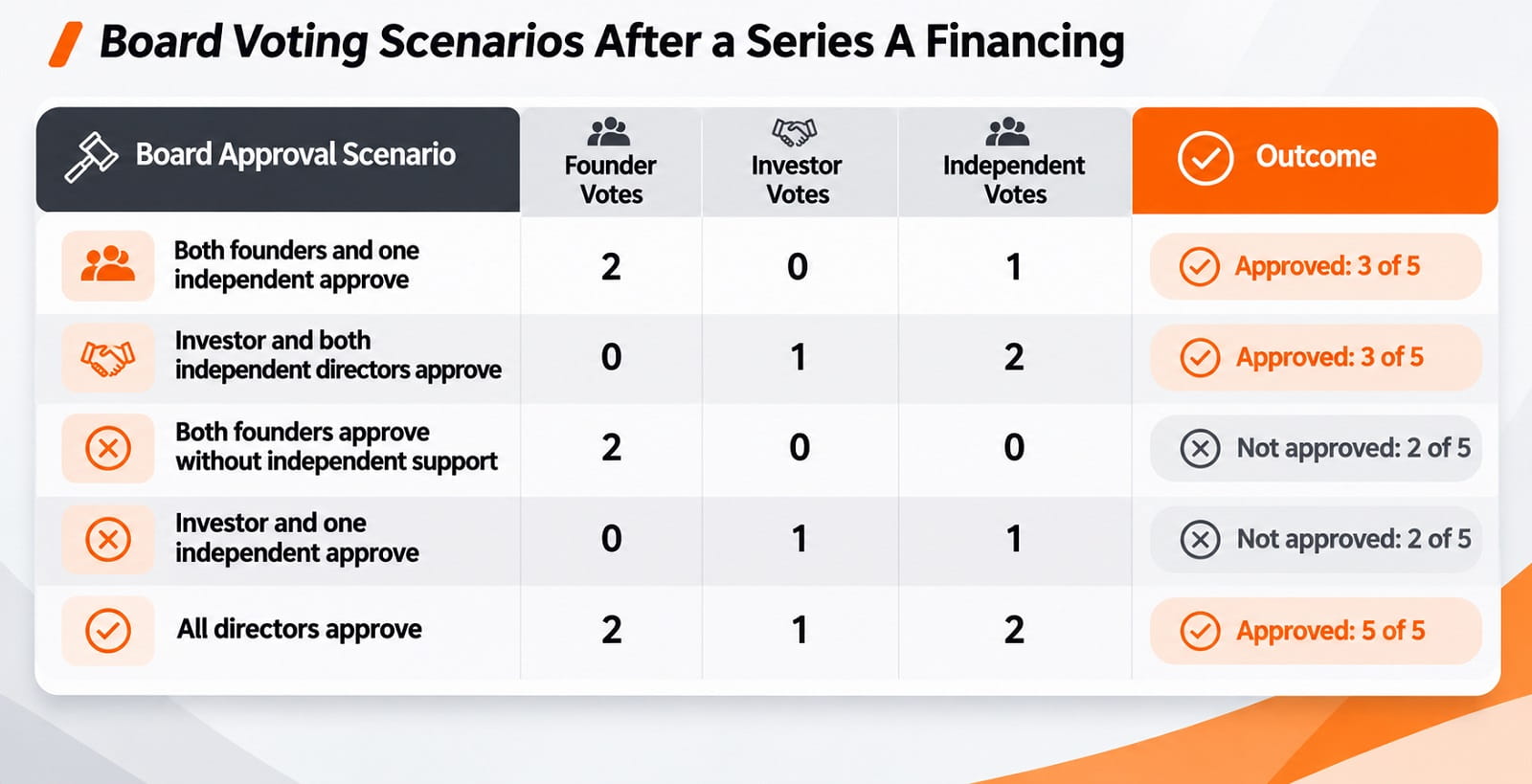
Table 2. Illustrative Board Voting Scenarios After a Series A Financing
The following table compares hypothetical voting outcomes under Northbridge's five-member board. It demonstrates when founder and investor support is sufficient for an ordinary board decision and when independent directors determine the result.
The first scenario shows that founder-designated directors can secure an ordinary majority with one independent director, even when the investor director disagrees. The second demonstrates that the investor director and both independent directors can approve a resolution without founder support. Neither outcome means that one investor or founder necessarily controls every corporate decision. Separate approvals, director duties, and applicable legal requirements may still affect whether an action can proceed.
What the Example Means for Founder Control
Northbridge's founders retain two seats on the expanded board, but they no longer have an ordinary voting majority by themselves. They need at least one additional director to support a resolution requiring three affirmative votes.
The investor director also cannot approve an ordinary resolution independently. However, the investor may influence decisions through discussions, strategic recommendations, and collaboration with independent directors.
This illustrates an important distinction: control is not simply the ability to appoint someone to the board. It depends on the votes required for a particular decision and the relationship between the applicable governance provisions.
Board Rights vs Shareholder Ownership
Founders sometimes assume that retaining a majority of the company's shares guarantees control over the board. In practice, ownership percentages and board voting authority are related but distinct.
Shareholder agreements and corporate documents may allocate board designation rights among different classes or groups. As a result, an investor owning a minority economic stake may have a contractual right to designate a director or exercise specified shareholder approvals.
Likewise, a founder holding a large ownership percentage may not have enough board-designated votes to approve a particular action independently.
The difference matters when negotiating a financing. A dilution calculation shows how equity ownership changes, but it does not fully describe changes in governance power. Founders need to review the capitalization structure and board arrangements separately before assessing the overall consequences of an investment.
The Difference Between Board Votes and Protective Provisions
Board approval and investor protective provisions operate through potentially separate mechanisms. A board may approve a proposed financing, acquisition, or charter amendment while an additional preferred shareholder consent remains necessary under the governing documents.
For example, assume Northbridge's board approves a new securities issuance by four votes to one. If the company's charter independently requires approval from a specified preferred shareholder group for that issuance, the board vote alone may not satisfy all necessary conditions.
The opposite distinction is also important. Shareholder support for a transaction does not necessarily replace board approval when applicable corporate law requires board authorization.
Founders should identify which actions require ordinary board approval, which require a special director approval, and which require shareholder consent. Treating these categories as interchangeable can create misunderstandings during financing negotiations or major transactions.
Fiduciary Duties of Investor-Appointed Directors
An investor-designated director generally owes fiduciary duties associated with serving on the company's board. For Delaware corporations, directors owe duties of care and loyalty to the corporation and its stockholders, subject to the applicable legal framework.
This means an investor-appointed director cannot simply assume that the appointing investor's commercial preferences determine the proper outcome of every decision. Situations involving investor-specific benefits, conflicting transactions, or differing shareholder interests may require careful consideration.
Conflicts can become particularly significant when the startup faces financial pressure, proposes a financing that favors one investor, or evaluates an acquisition with different outcomes for preferred and common shareholders.
Appropriate procedures may include identifying potential conflicts, obtaining legal advice, and determining whether additional safeguards or independent decision-making processes are required. The exact legal treatment depends on the circumstances and governing law.
Board observers occupy a different position. Their rights and obligations generally arise from contract rather than director status, although their conduct and influence can still raise legal or governance issues that require attention.
Negotiating Board Rights Without Losing Operational Flexibility
Founders should evaluate investor board rights based on how the proposed structure will operate after the financing, not only how it appears in the term sheet. A single investor director may be appropriate when the individual brings relevant experience and the remaining seats provide a workable governance balance.
The first negotiation priority is board composition. Founders should establish how many directors the company needs, who designates each seat, and how independent directors are selected. An independent position should have a clear appointment and replacement process rather than becoming an unresolved source of disagreement.
The second priority concerns approval requirements. Special investor director consent rights may protect legitimate interests, but applying them to routine hiring, ordinary contracts, or minor expenditures can slow management. Such requirements should be proportionate to the significance of the decisions they cover.
Founders should also evaluate how governance changes during later financing rounds. If each new investor expects another board seat, the board may become unnecessarily large. The agreement should provide enough flexibility to accommodate future investors without making decision-making inefficient.
Questions Founders Should Resolve Before Signing
A practical negotiation should establish who appoints each director, which voting threshold applies to ordinary resolutions, and how vacancies are filled. The parties should also understand whether a founder-designated seat depends on continued employment and whether an investor designation right ends below a particular ownership threshold.
For observer arrangements, founders should confirm which meetings and materials are covered, whether observers can participate in discussions, and how confidential information is protected. The company should retain appropriate mechanisms to manage conflicts and legally privileged information.
Finally, the financing documents should be reviewed together. Board provisions, preferred shareholder protections, and other agreements may establish overlapping requirements. Legal review should confirm that those mechanisms are consistent and workable under the governing law.
Managing Board Meetings and Investor Participation
A board structure is effective only when the company establishes reliable governance practices. Directors should receive appropriate information before meetings, understand the decisions requiring approval, and have adequate opportunities to evaluate material issues.
Founders can support this process through organized meeting agendas, accurate financial reporting, clear records of resolutions, and consistent communication about strategic developments. The purpose is to support informed oversight rather than create unnecessary administrative procedures.
Investor-appointed directors can contribute most effectively when expectations are established early. Their role includes reviewing performance and participating in governance, while management remains responsible for executing ordinary business operations within the applicable authority structure.
For observer participants, the company should maintain clear procedures for distributing documents and identifying circumstances requiring restricted access. Good governance depends as much on how rights are exercised as on their contractual wording.
Common Mistakes Founders Make With Investor Board Rights
One mistake is measuring control only by the number of founder-appointed directors. A board majority may not eliminate separate investor consent requirements, while an apparently balanced board may depend heavily on the independence of a particular director.
Another mistake is failing to negotiate replacement and termination provisions. A board designation right may continue after circumstances change unless the agreement defines the relevant conditions clearly.
Founders may also grant observer access without sufficient confidentiality protections. Although an observer cannot formally vote, access to sensitive discussions can still create commercial and legal concerns when the investor has competing interests.
Finally, founders sometimes concentrate entirely on retaining control rather than evaluating the quality of governance. A board that consistently produces informed, independent decisions can support the company's long-term development more effectively than one designed only to preserve a particular shareholder group's influence.
Final Thoughts
Investor board rights shape how startups balance founder leadership with investor oversight. Director designation rights, observer arrangements, approval requirements, and board composition can all influence the company's ability to make important decisions.
For founders, the central task is to understand how the governance structure operates in practice. Retaining equity ownership does not necessarily preserve board control, and granting an investor a board seat does not automatically give that investor authority over every decision.
A well-negotiated arrangement should establish clear appointment procedures, appropriate voting requirements, meaningful confidentiality protections, and room for the board to evolve as the company grows. Reviewing those terms before financing closes helps founders build a governance structure that supports both accountability and effective management.
FAQ
Do Investors Automatically Get a Board Seat?
No. An equity investment does not automatically provide board representation. The right to designate a director depends on applicable corporate law, governing documents, and negotiated financing arrangements.
How Many Board Seats Should Investors Have?
There is no universal number. Appropriate representation depends on the company's stage, ownership structure, financing arrangements, and governance needs. Founders should evaluate both the distribution of seats and the resulting voting requirements.
Can Investors Control a Startup With a Minority Ownership Stake?
Minority investors may obtain meaningful influence through board representation, special approvals, or other contractual protections. However, a minority economic stake alone does not establish complete control, and the effect depends on the company's governance structure.
What Is the Difference Between an Investor Director and a Board Observer?
An investor director is a formal board member with voting authority and applicable director duties. A board observer generally receives contractual attendance or information rights without becoming a voting director.
Can an Investor-Appointed Director Be Removed?
Removal and replacement depend on corporate law and the applicable governing agreements. A designation arrangement may establish who can select a replacement and when the underlying appointment right ends.
Can Founders Lose Board Control After Series A?
Yes. A financing may change board composition, appointment rights, or approval requirements. Founders should assess the proposed board structure separately from the dilution of their equity ownership.
Can an Investor Director Block a Board Decision?
An investor director may influence or prevent approval depending on the required voting threshold and whether specific director consent is necessary. Separate preferred shareholder veto rights may also apply, but they are not equivalent to an individual director's ordinary vote.

Mobina Khanki
Venture & Funding Writer at PinerookMobina Khanki covers venture capital, startup funding, fundraising, and startup finance for Pinerook, focusing on founders and investors.
 Seen first.