A startup can execute well and still find that growth becomes harder. Customers take longer to approve purchases, investors ask for stronger evidence, and hiring plans become more expensive to maintain. These changes do not always arrive with an official recession. They can begin while the wider economy is still growing, just more slowly.
A useful understanding of macroeconomics for startups connects these shifts to operating choices. The point is not to forecast the next boom or downturn. It is to recognize when the assumptions behind a growth plan have changed.
Economic Cycles Change the Conditions for Growth
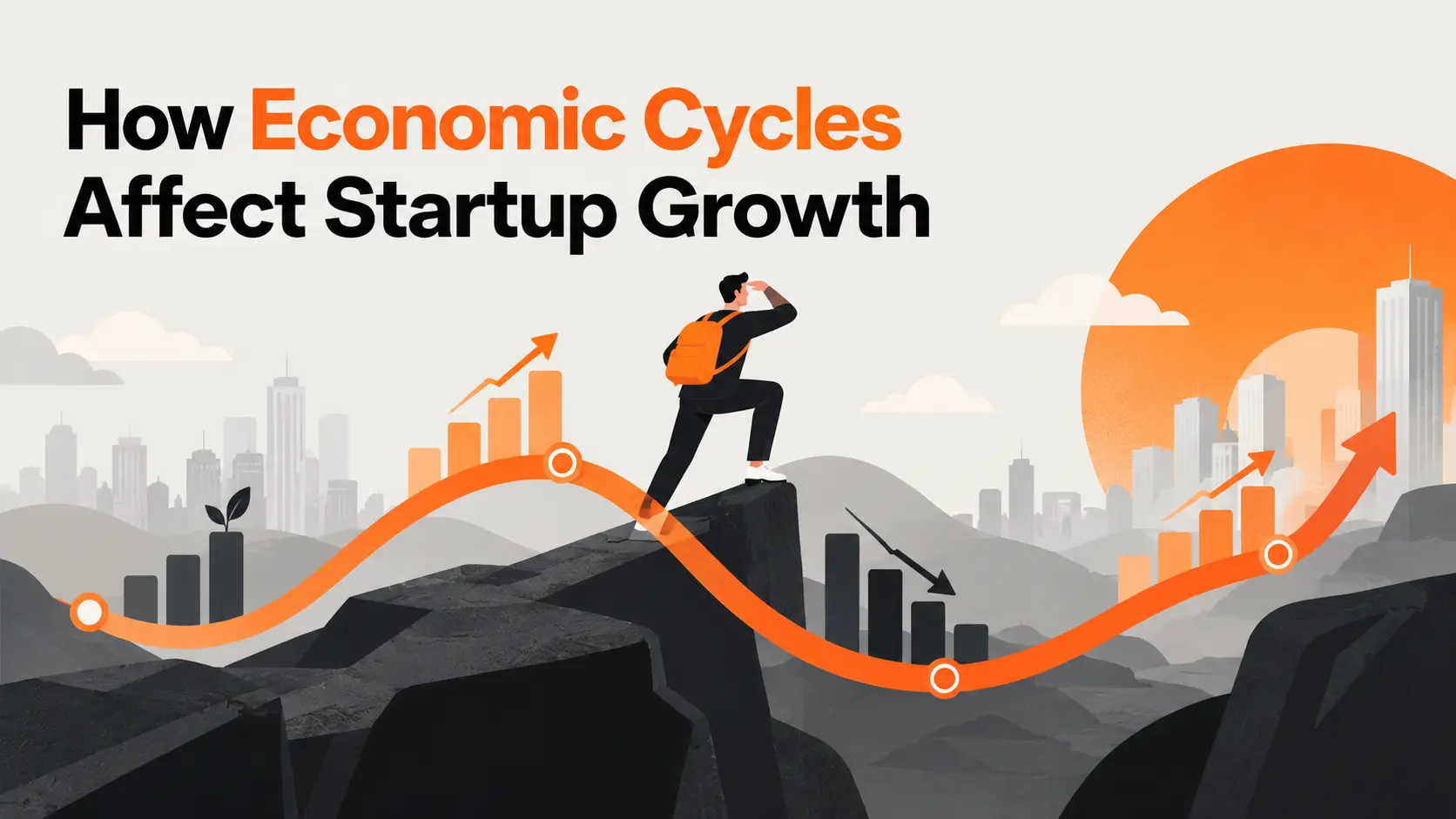
An economic cycle describes changes in activity over time. Businesses often experience expansion, slowing growth, contraction and recovery, although real cycles are irregular and those labels are not a reliable calendar. In the United States, the NBER identifies peaks and troughs in broad economic activity; it does not declare each planning phase in advance.
The economic cycle is also different from a startup’s own life cycle. A company can be in its first year of product development during an economic expansion, or it can be scaling rapidly while the wider economy is weak. Founders need to consider both the company’s stage and the environment in which its customers operate.
How Each Phase Can Affect Startup Growth
The same product may require a different operating plan as the market changes. These are possible patterns, not rules that apply to every sector or country.
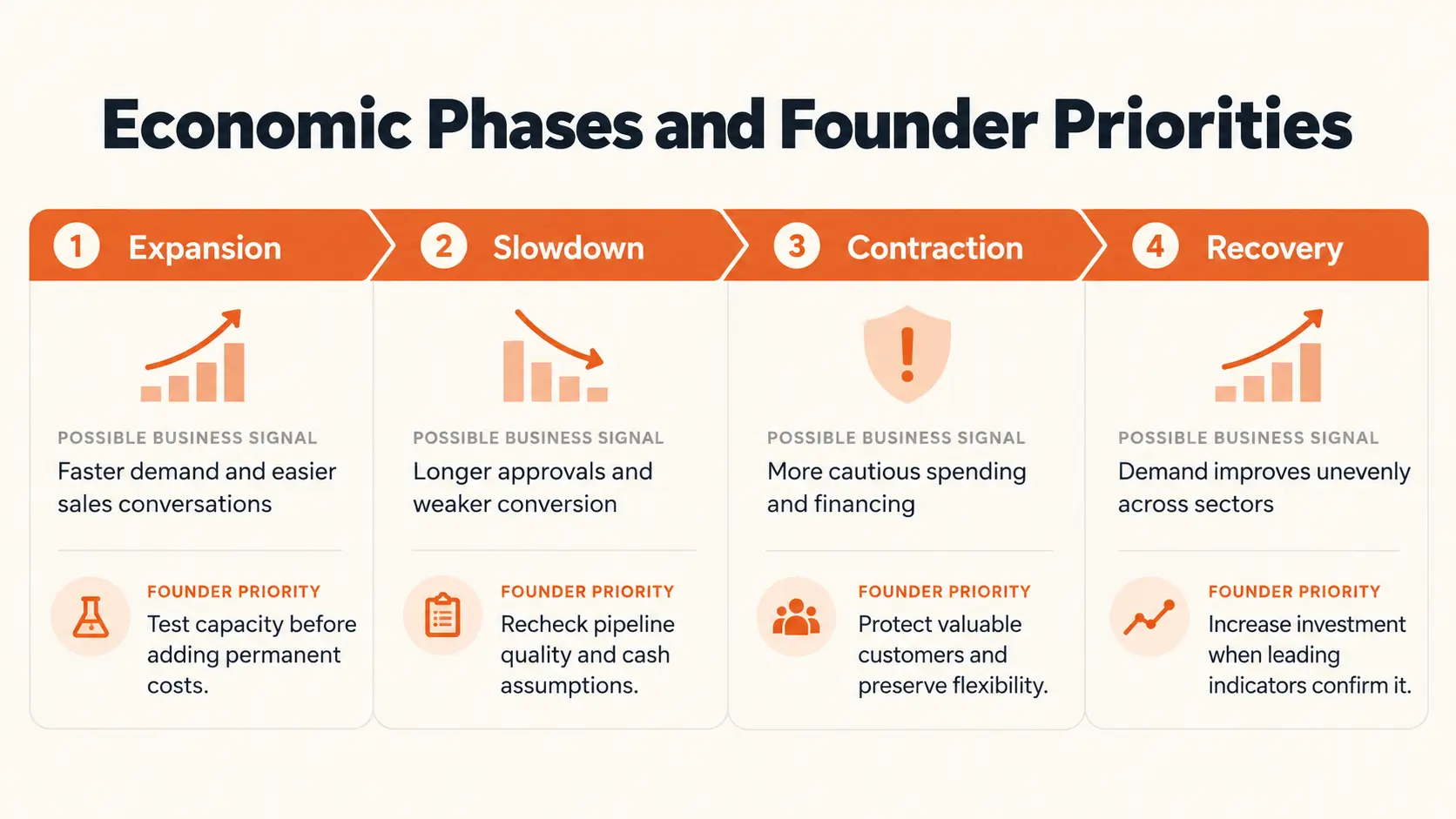
The First Warning Often Appears Inside the Sales Funnel
Customer decisions slow before the economy contracts
A business customer may still have budget but need a second approval. A household may keep researching a product while delaying payment. The startup can report a healthy pipeline even as fewer opportunities close. This is why booked revenue alone is a late signal of changing demand.
Compare the time between first contact and signed contract, the share of qualified leads that convert, and the reasons deals are lost. A longer sales cycle across several customer groups deserves attention. One weak month does not prove an economic turning point.
Financing and hiring respond on different schedules
Capital availability can tighten before customers reduce spending. Investors may place more weight on retention and cash efficiency, while companies delay new roles until revenue is more predictable. During recovery, customers may return before venture financing or hiring budgets fully recover.
Research published in the American Economic Review found that the economic conditions faced by new firms can be associated with persistent differences in later employment growth. For founders, the lesson is to test the scale of a hiring or expansion commitment against several demand scenarios rather than one optimistic forecast.
Not Every Startup Moves With the Same Cycle
A premium travel service may be sensitive to household confidence. A business selling essential security software may see steadier renewals. A product that clearly reduces a customer’s operating costs can attract interest during a slowdown, but buyers may still delay procurement. These are tendencies to investigate, not labels that guarantee resilience.
The most useful question is what budget pays for the product. If the buyer sees it as optional experimentation, spending may disappear quickly. If it prevents a measurable loss or supports essential operations, demand may be more durable. Founders should also ask how much time passes between a change in the customer’s business and a change in their own receipts.
A Simple Example of a Slowing Market
Imagine a hypothetical software startup with $120,000 in monthly recurring revenue. In one quarter, its typical sales cycle is 45 days. Over the next quarter, that cycle extends to 70 days, while the number of qualified leads stays similar. New contracts are postponed, but payroll and hosting bills still arrive on schedule.
The first response should not be an automatic price cut or a broad hiring freeze. The founder should check whether deals are delayed by customer approvals, poor qualification or a weaker product proposition. If delays appear across several segments, the cash forecast should assume slower collections and later new revenue. If the problem is confined to one segment, the response may be narrower.
These figures are illustrative. They show why a growth rate can weaken before an economic contraction is officially recognized and why diagnosing the cause matters more than assigning a label to the cycle.
How to Adjust the Growth Plan Without Guessing the Cycle
Track company signals alongside economic context
Review conversion, sales cycle length, renewals, cash collected and net burn on a consistent schedule. Then compare them with the conditions facing your buyers, such as employment, financing costs or business confidence. OECD leading indicators can offer context about possible turning points, but they do not predict the timing or size of a startup’s revenue changes.
Set decision triggers before pressure builds
Choose a small number of thresholds that would change a real decision. For example, a team might postpone a new hire if qualified pipeline coverage remains below its internal target for two months, or resume expansion only when collections and retention support the extra expense. These are company specific operating rules, not universal economic benchmarks.
Keep the ability to invest during recovery
Avoid making every commitment permanent during an expansion. Shorter vendor commitments, staged hiring and a clear distinction between essential and optional projects leave room to respond. The same flexibility helps when demand returns: founders can restart the investments supported by evidence rather than trying to rebuild everything at once.
The Bottom Line
Economic cycles affect startup growth through customers, capital and the timing of cash, but they do not determine every company’s outcome. A useful plan connects external conditions to a few measurable internal signals. Founders who adjust commitments when those signals change can pursue growth without pretending to know when the next economic turning point will arrive.
FAQ
Can a startup grow during an economic contraction?
Yes. Growth depends on the problem solved, the customers served and the company’s finances. Some products remain essential or become more valuable when buyers need to reduce costs.
Is economic recovery the same as a return to previous sales levels?
No. Recovery means activity is improving from a low point. Demand, employment and spending can remain below earlier levels for some time.
Which signals should founders watch first?
Start with qualified conversion, sales cycle length, retention and cash collection. These show how market conditions are reaching the business more directly than a headline economic indicator.
Are economic cycles and startup growth stages the same thing?
No. Economic cycles describe changes in the wider economy. Startup stages describe the company’s development. A young startup and a mature scaleup can face the same economy but make different decisions.

Masoumeh Jahangard
Markets & Economy Writer at PinerookMasoumeh Jahangard covers markets, economic trends, and business conditions for Pinerook, focusing on how they affect startups and growing companies.
 Seen first.